
Why extended sessions or EMDR intensives?
- Brief, client centered & focused on one processing goal at a time.
- Major decrease in emotional & physical distress related to disturbing life events
- Facilitates long lasting behavioral & emotional change in less time
- Intensives allow us to mindfully focus on healing without distraction.
- Shorter time frames than other treatments with comparable results
Life has a way of operating in cycles. Patterns or themes of fear, frustrations, disappointments, or unfulfilling and sometimes toxic relationships can continue to rear its ugly head. If you’re noticing patterns in your life and ready for a shift, EMDR might be for you.
my approach to assisting clients in finding resolution & relief includes a beautiful blend of EMDR & Somatic Processing. EMDR therapy and somatic processing are both approaches used in psychotherapy to address trauma imprints and promote healing. EMDR therapy, which stands for Eye Movement Desensitization and Reprocessing therapy, utilizes bilateral stimulation to help individuals reprocess distressing events or negative core beliefs. This helps to reduce the distress associated with these memories and allows for integration and healing.
Somatic processing, on the other hand, focuses on the body’s physical sensations and experiences related to trauma. It recognizes that trauma is not only stored in the mind but also in the body. Somatic processing techniques, such as body-centered mindfulness, breathwork, and movement, are used to help individuals connect with and release trapped energy and tension in the body.
Both EMDR therapy and somatic processing aim to help individuals safely process and release trauma as well as disturbing belief patterns reinforcing unhealthy patterns and behaviors, allowing for the restoration of emotional well-being.
Combining these two approaches can be beneficial for individuals, as it allows for a comprehensive and holistic healing process. By addressing both the cognitive-emotional and physical aspects, individuals can experience deeper healing and integration of their experiences to move forward into a more grounded and connected sense of the present moment.
EMDR (Eye Movement Desensitization Reprocessing) focuses on past, present and future. In short, trauma and/or disturbing events (too much or too little of something at one time or over the course of time) changes the brain. Past experiences can influence our thoughts, feelings, and behaviors in the present and continues to show up in the future until the negative core impact is resolved from an emotional, mental, & physiological release. EMDR enables people the opportunity to heal from the symptoms and emotional distress that are the result of disturbing life experiences that have caused adaptive behaviors or feelings in response to the world within or around them. Studies show that by using EMDR therapy people can experience the benefits that once took years to make a difference and shift internalized negative core beliefs that drive their emotions, behaviors, and relationships. EMDR allows the brain’s information processing system to naturally move towards an adaptive resolution. If this system is blocked or imbalanced by the impact of a disturbing event, the emotional wound festers and can cause intense & continued suffering. Once the block is removed, healing can occur. Using the detailed protocols and procedures learned in EMDR therapy training, clinicians help clients activate their natural healing processes and learn to trust themselves.
Traditional weekly psychotherapy can be difficult to fit into your life. Extended sessions and EMDR Intensives provide the flexibility some people need to resolve current distress or long-standing patterns of behavior or fear. Intensives gives you the ability to manage your time & your healing.
EMDR intensive sessions refer to a condensed and focused form of EMDR therapy, where multiple sessions are conducted within a shorter time frame, typically over a few consecutive days. While traditional EMDR therapy is usually spread out over several weeks or months, intensive sessions offer a more concentrated approach. Here are some benefits of EMDR intensive sessions:
- Accelerated progress: The condensed nature of intensive sessions allows for rapid progress and potentially quicker resolution of trauma symptoms. By working through multiple sessions in a shorter period, individuals can experience significant shifts and changes within a shorter time frame.
- Deep immersion: Intensive sessions provide an opportunity for individuals to fully immerse themselves in the therapeutic process. With fewer distractions and a focused environment, individuals can dive deeper into their healing journey and maintain a continuous therapeutic momentum.
- Enhanced continuity: Traditional therapy sessions are often spread out over time, which can sometimes disrupt the continuity of the therapeutic process. Intensive sessions offer a more consistent and continuous experience, allowing individuals to stay engaged in the healing process without interruptions.
- Increased safety and containment: Intensive sessions provide a contained and structured environment where individuals can safely explore and process traumatic memories. With the support of a trained therapist, individuals can delve into difficult emotions and experiences, knowing they have dedicated time and support to process them fully.
- Intensified therapeutic alliance: Spending more concentrated time with a therapist during intensive sessions can foster a stronger therapeutic alliance. This enhanced connection and trust between the individual and therapist can contribute to a deeper level of healing and emotional support.
- Convenience and flexibility: EMDR intensive sessions can be particularly beneficial for individuals who have limited availability or who prefer to complete therapy within a shorter time frame. This option allows for greater flexibility and can accommodate individuals’ specific scheduling needs.
It is important to note that while intensive sessions may offer certain advantages, they may not be suitable for everyone. The intensity of the process can be emotionally demanding, and individuals should discuss their readiness and preferences with their therapist to determine if intensive sessions are appropriate for their specific circumstances.
Learn more about EMDR at EMDRIA.ORG
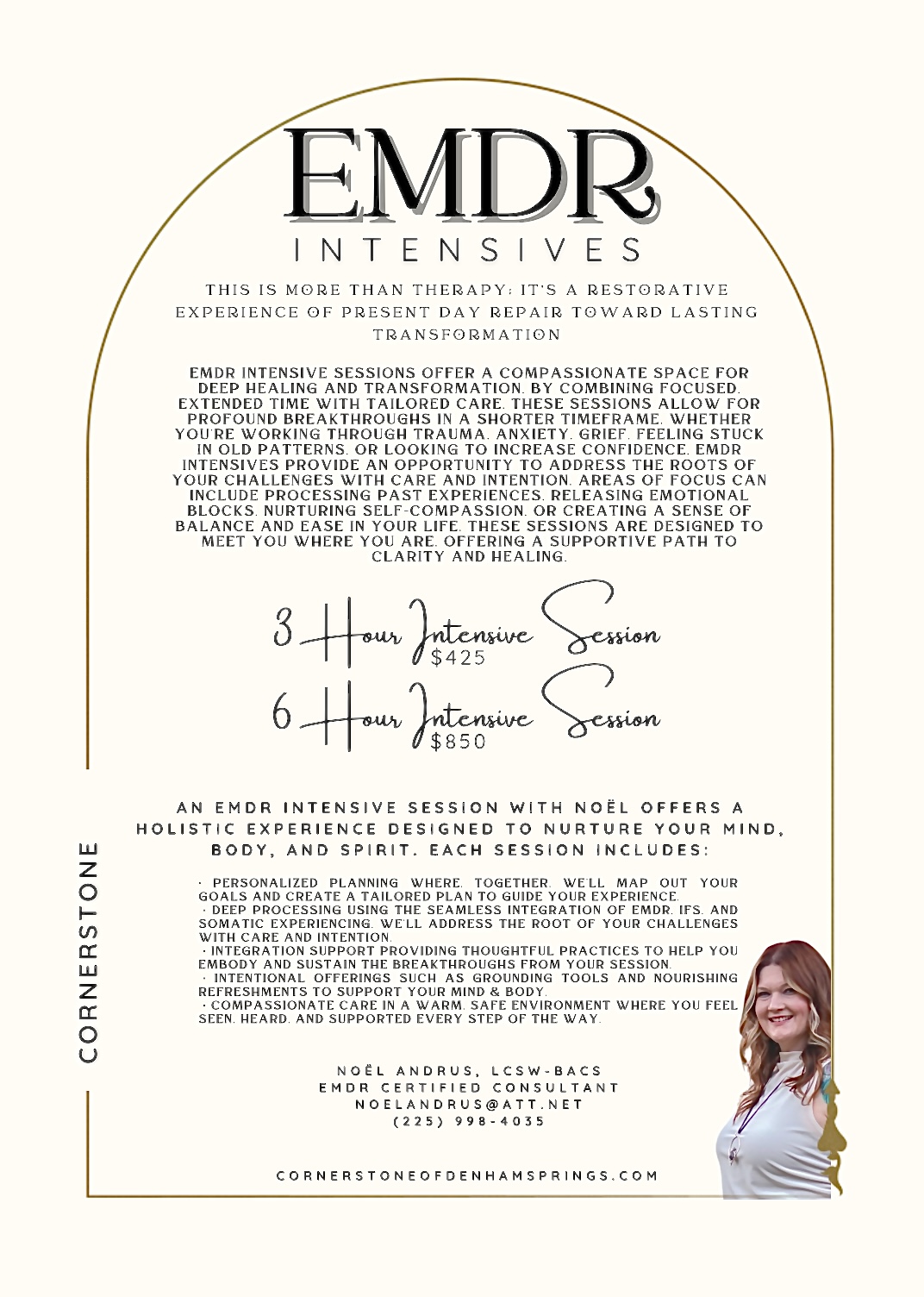
Package Options & Investment in Your Well-Being
Extended Sessions (Existing Clients only)
Standard Hourly Rate
Half-Day Intensive Session
3-hours with light snacks provided and breaks as needed
$425
Full-Day Intensive Session
6-hours with nourishing lunch, light snacks and movement breaks as needed for grounding
$850
Preparation and Post Integration sessions provided & required for all EMDR Intensive Packages

Insurance does not cover & will not reimburse for EMDR Intensive session, but can be applied to assist in costs pertaining to your initial assessment & treatment planning & follow up appointment according to your benefits coverage. Members are responsible for the remaining fees and provided with a Fair Estimate Agreement.
225.998.4035
To set up a free consultation call to see if EMDR Intensives are a good fit for you email: noelandrus@att.net or use the contact form below
50% Deposit is due to confirm your extended or intensive session. Remaining balance is due at the time of service. Insurance may cover your initial assessment, follow up session, & a portion of the first hour of your chosen session.
Common questions about EMDR Therapy explained:
- What is EMDR therapy?
EMDR therapy stands for Eye Movement Desensitization and Reprocessing therapy. It is a psychotherapy approach that helps individuals process and heal from traumatic or distressing experiences. - How does EMDR therapy work?
EMDR therapy works by using bilateral stimulation, which can be in the form of eye movements, taps, or sounds, to help stimulate both sides of the brain while recalling distressing memories. This process facilitates the reprocessing of traumatic memories, allowing individuals to integrate them in a more adaptive and less distressing way. - What conditions can EMDR therapy help with?
EMDR therapy is primarily used to treat trauma-related disorders, such as post-traumatic stress disorder (PTSD). It has also shown effectiveness in addressing other mental health conditions, including anxiety disorders, phobias, depression, and addiction. - Is EMDR therapy evidence-based?
Yes, EMDR therapy is recognized as an evidence-based treatment by various mental health organizations, including the American Psychiatric Association (APA) and the World Health Organization (WHO). Numerous studies have demonstrated its effectiveness in treating trauma and other mental health conditions. - How long does EMDR therapy take?
The duration of EMDR therapy can vary depending on individual factors. Typically, EMDR therapy is conducted over several sessions, with each session lasting approximately 60-90 minutes. The number of sessions required depends on the complexity and severity of the issues being addressed. - Are there any side effects of EMDR therapy?
While EMDR therapy is generally considered safe, some individuals may experience temporary discomfort or emotional distress during or after sessions. This is often a normal part of the healing process and tends to subside as therapy progresses. Therapists are trained to provide support and coping strategies to manage any potential distress. - Do I need to continue therapy after EMDR?
The need for continued therapy after EMDR varies depending on individual circumstances. Some individuals may find that EMDR therapy alone is sufficient to address their concerns, while others may benefit from ongoing therapy or support to maintain progress, work on other areas of personal growth, or address underlying issues. - Can EMDR therapy be done remotely?
Yes, EMDR therapy can be conducted remotely via video conferencing platforms. However, it is important to ensure that the therapist is experienced and trained in providing remote EMDR therapy to ensure its effectiveness and safety.



 Cornerstone Counseling & Wellness