
A memory may continue to feel overwhelming. Certain situations may bring unexpected emotional reactions. We may understand intellectually that something is over while still experiencing its effects in our thoughts, emotions, relationships, or bodies.
Eye Movement Desensitization and Reprocessing (EMDR) is an evidence-based psychotherapy that helps people process distressing experiences and memories that continue to affect their lives.
At Cornerstone, EMDR is approached thoughtfully and collaboratively, with attention to your experiences, your readiness, and your individual needs.
What Is EMDR?
EMDR is a structured psychotherapy that helps the brain process distressing memories and experiences.
When overwhelming experiences are not fully processed, aspects of the memory may continue to feel emotionally or physically present. This can contribute to patterns of distress, avoidance, heightened emotional reactions, or negative beliefs about ourselves.
EMDR uses bilateral stimulation—such as guided eye movements or other alternating sensory stimulation—while attending to aspects of a distressing memory.
This process supports the reprocessing of memories so that they may become less disturbing and more integrated into your broader life experience.
EMDR does not erase memories or change what happened. Instead, it may help change how those memories are experienced and how they influence the present.
What Can EMDR Help Address?
EMDR is well-established as a treatment for PTSD and trauma-related symptoms. Depending on your needs and clinical assessment, it may also be incorporated into treatment for:
- Distressing or overwhelming experiences.
- Anxiety and emotional distress.
- Negative beliefs about yourself.
- Grief and difficult life experiences.
- Relationship-related patterns.
- Experiences that continue to influence present-day functioning.
The appropriateness of EMDR depends on individual circumstances, treatment goals, and clinical considerations.
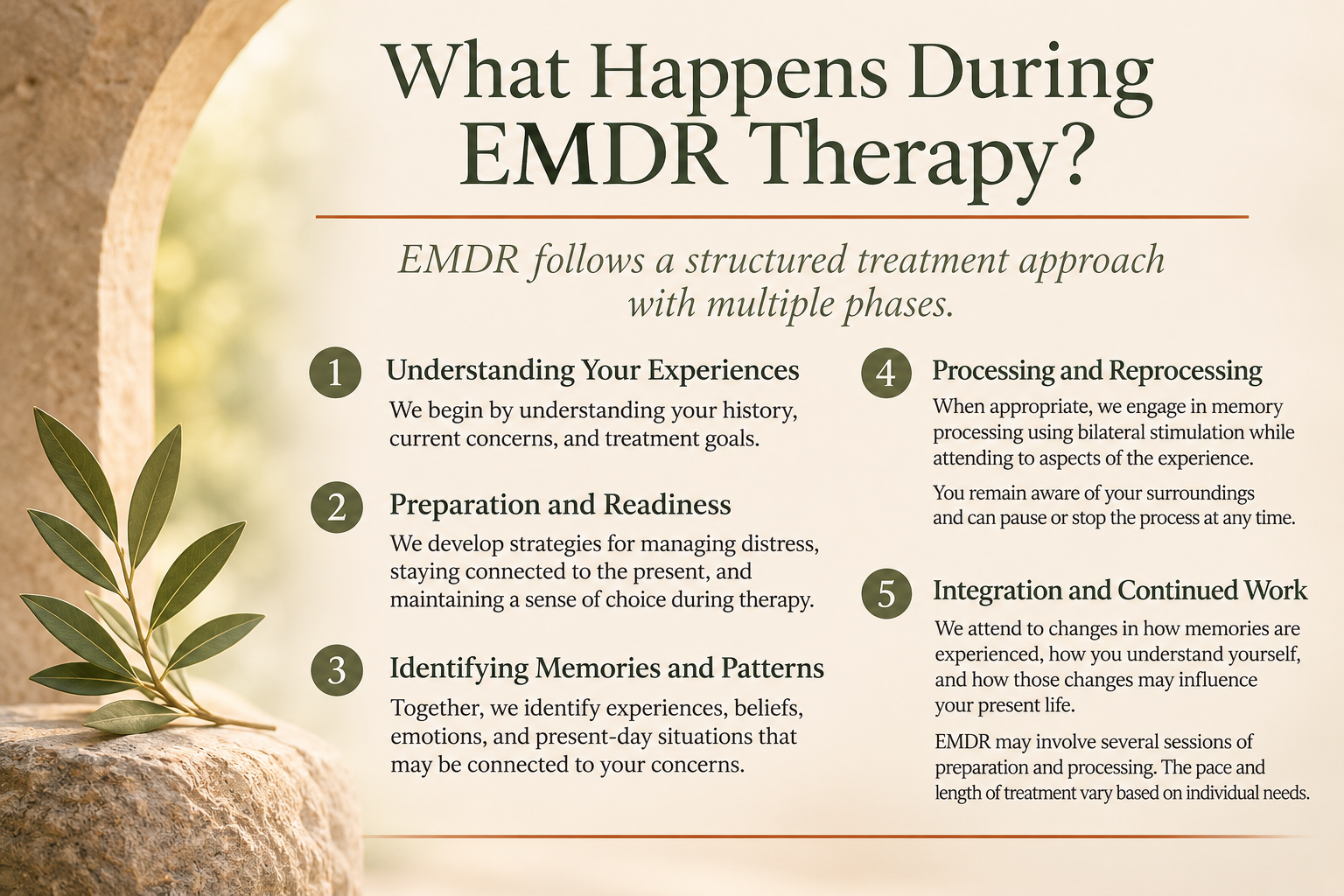
Is EMDR Right for Everyone?
EMDR is not necessarily the best starting point for every person or every experience.
Some individuals benefit first from developing greater emotional stability, understanding patterns, strengthening relationships, or building supportive resources.
Our approach considers readiness, current functioning, and your preferences before beginning memory processing.
You are an active participant in treatment, and your comfort, consent, and ability to remain engaged in the process matter.
EMDR and Other Therapeutic Approaches
At Cornerstone, EMDR may be integrated with other therapeutic approaches, including Internal Family Systems (IFS) and somatic processing, when clinically appropriate.
This allows us to consider not only the memories that continue to affect you, but also the emotions, protective responses, and patterns that have developed around those experiences.
Treatment remains individualized rather than driven by a particular protocol alone.

Moving Forward
You are not defined by the experiences that have shaped you.
Therapy can offer an opportunity to understand those experiences, reduce their influence on the present, and develop greater freedom in how you respond to life.
If you are interested in EMDR, we welcome a conversation about your goals and whether this approach may be appropriate for you.