
Sometimes our thoughts, emotions, and reactions seem to move in different directions. We may find ourselves responding in ways we don’t fully understand, feeling overwhelmed by emotions, or struggling to make sense of experiences that continue to affect us.
Internal Family Systems (IFS) and somatic processing offer ways to better understand these experiences while developing a more compassionate relationship with ourselves.
At Cornerstone, these approaches support a collaborative process of curiosity, awareness, and meaningful change—honoring both our inner experiences and the ways our bodies respond to life.
What Is Internal Family Systems (IFS)?
Internal Family Systems is a therapeutic approach that understands the mind as having different parts or aspects of ourselves. These parts often develop in response to life experiences and relationships, taking on roles intended to protect us, help us cope, or keep us connected.
You may recognize parts of yourself that:
- Work hard to keep everything together.
- Avoid conflict or difficult emotions.
- Feel critical, anxious, or responsible for others.
- Withdraw when relationships feel overwhelming.
- Carry painful memories or feelings of shame.
- Long for connection while also fearing vulnerability.
IFS invites us to approach these experiences with curiosity rather than judgment.
Instead of viewing these parts as problems to eliminate, we explore what they may be responding to, what they have been trying to accomplish, and what they might need in order to respond differently.
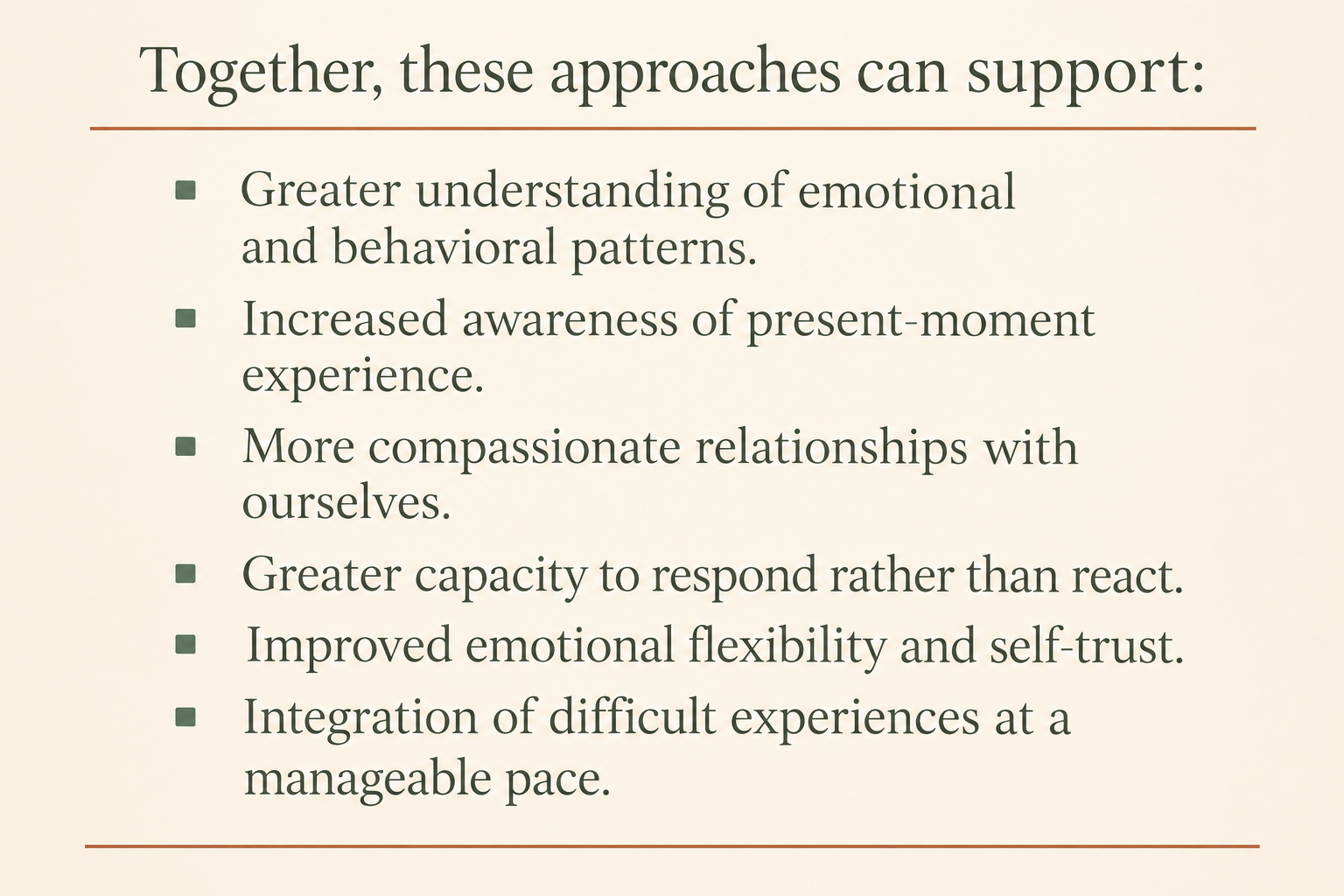
The goal is greater internal understanding, flexibility, and access to a grounded, compassionate sense of self.
What Is Somatic Processing?
Our experiences are not held only in our thoughts and memories. Stressful and overwhelming experiences can also influence how we experience our bodies, emotions, and relationships.
Somatic processing involves gently noticing and working with present-moment physical experiences that may accompany emotional distress.
This might include:
- Tension, heaviness, or constriction.
- Changes in breathing or muscle tension.
- Feeling disconnected, numb, or overwhelmed.
- Restlessness or difficulty settling.
- Sensations associated with particular memories or emotions.
Rather than forcing a particular response, somatic processing supports greater awareness of what is happening and the development of a more manageable relationship with those experiences.
How IFS and Somatic Processing Work Together
IFS helps us understand the different parts of our inner experience.
Somatic processing helps us notice how those experiences may also show up physically.
What Can Therapy Look Like?
Therapy is collaborative and responsive to your needs.
We may explore patterns in relationships, emotions, memories, or everyday experiences while gently noticing what happens internally and physically.
You will not be expected to disclose everything at once, revisit painful memories before you are ready, or engage in body-focused exercises that feel uncomfortable.
Our work emphasizes choice, pacing, and a respectful understanding of your experience.
A Note About Safety and Readiness
Trauma processing is not a race.
Before engaging in deeper processing, we consider your current circumstances, available supports, capacity for emotional regulation, and readiness for the work.
Sometimes the most meaningful progress begins with understanding, stabilization, and building a sense of safety in the present.
Exploring Therapy at Cornerstone
IFS and somatic processing can be incorporated into therapy based on your goals, preferences, and clinical needs.
If you are interested in learning more about these approaches, we welcome a conversation about what therapy might look like for you.